
AI + DevOps: A Collaboration Model
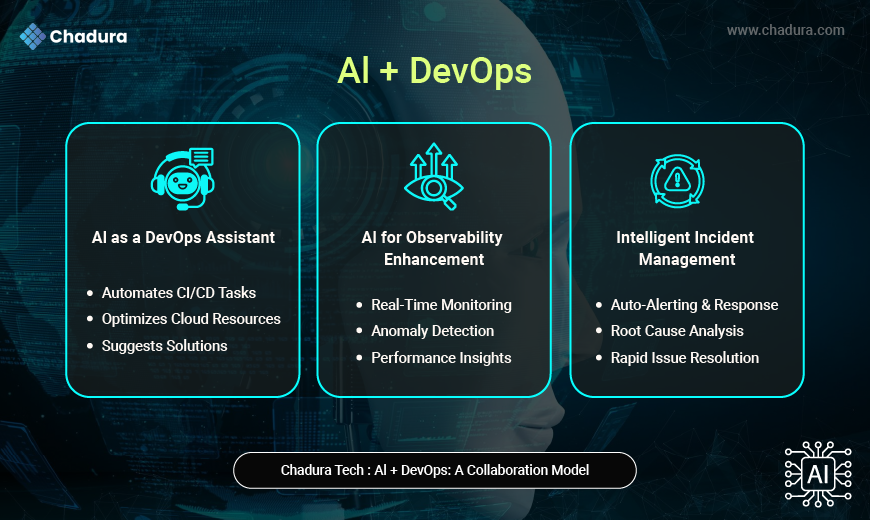
AI and DevOps work best together, with AI handling data-heavy automation and predictive analysis while engineers guide strategy and decision-making.
This collaboration model boosts efficiency, reduces risk, and empowers teams to build smarter, more resilient systems.
Instead of replacement, the future clearly indicates augmentation.
1. AI as a DevOps Assistant
Similar to how GitHub Copilot assists developers, AI tools now assist DevOps engineers by:
- Generating Terraform modules
- Suggesting CI/CD optimizations
- Predicting deployment failures
- The engineer remains in control.
2. AI for Observability Enhancement
Observability platforms enhanced by AI:
- Reduce alert fatigue
- Prioritize incidents
- Filter noise
Engineers focus on meaningful decisions instead of data overload.
3. Intelligent Incident Management
AI can:
- Correlate logs, metrics, and traces
- Suggest root causes
- Recommend remediation steps
But engineers validate and execute final actions.
The Economic Perspective
Will Companies Replace DevOps Engineers?
Unlikely.
Instead, companies will:
- Hire fewer junior operational staff
- Upskill engineers into AI-driven DevOps roles
- Focus on strategic DevOps architects
AI reduces repetitive operational work — not strategic roles.
The New DevOps Skillset in 2026
DevOps engineers must now understand:
- AI fundamentals
- Prompt engineering
- Data interpretation
- AI governance
- Automation scripting
Future job titles may include:
- AI-Enabled DevOps Engineer
- AIOps Architect
- DevSecOps + AI Specialist
Risks of Over-Reliance on AI
While AI is powerful, overdependence introduces risks:
1. Black Box Decision-Making
AI recommendations may lack transparency.
2. Security Vulnerabilities
Auto-generated infrastructure may contain flaws.
3. Loss of Foundational Knowledge
Engineers who rely too heavily on AI may lose troubleshooting skills.
4. Compliance and Governance Challenges
AI-generated configurations may not meet regulatory requirements.
Human oversight is non-negotiable.
Real-World Use Cases – Short Notes
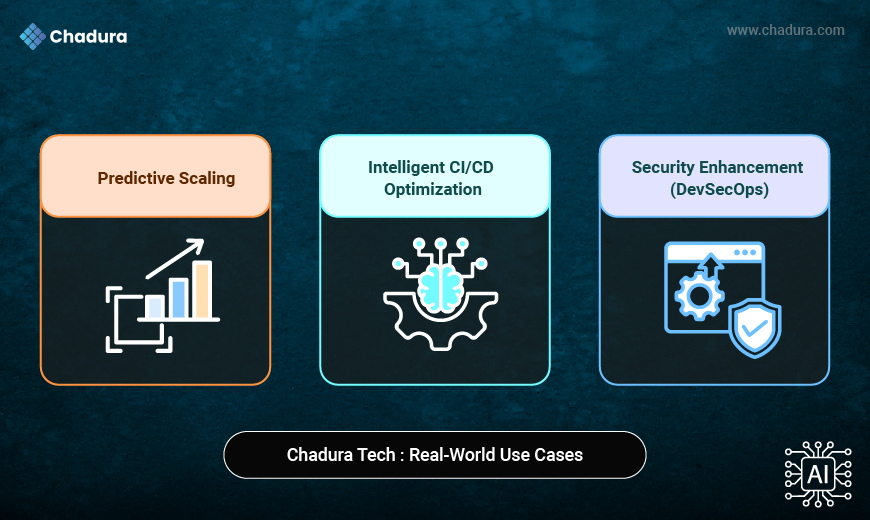
Predictive Scaling
- AI analyzes traffic patterns and automatically scales Kubernetes clusters before demand spikes.
- Reduces downtime and optimizes cloud costs.
Intelligent CI/CD Optimization
- AI reviews pipeline performance trends and recommends parallel builds and smarter dependency caching.
- Speeds up deployments and improves release efficiency.
Security Enhancement (DevSecOps)
- AI scans container images to detect vulnerabilities before production deployment.
- Strengthens security posture and minimizes risk exposure.
Psychological Impact on DevOps Engineers
As AI adoption grows, many DevOps engineers fear job replacement.
However, AI primarily eliminates repetitive operational tasks, allowing engineers to focus on innovation, architecture, and strategic problem-solving.
Rather than disappearing, the DevOps role evolves into a more intelligent, high-impact position driven by human expertise and AI collaboration.
The Future: Autonomous DevOps?
By 2030, we may see:
- Fully self-healing infrastructure
- AI-generated infrastructure blueprints
- Autonomous deployment validation
But full autonomy without human governance is unlikely in enterprise environments.
Regulations, cybersecurity, and business strategy demand human oversight.
Collaboration Framework for 2026 Organizations
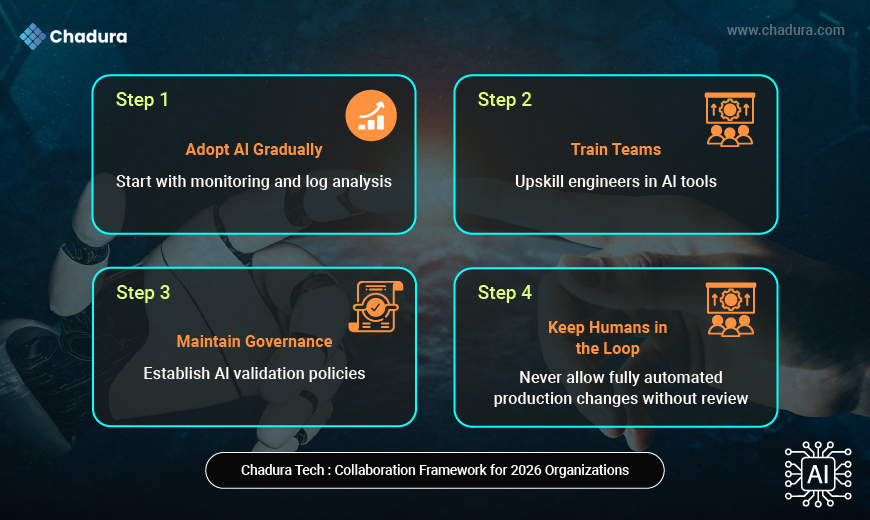
To successfully integrate AI into DevOps:
Step 1: Adopt AI Gradually
Start with monitoring and log analysis.
Step 2: Train Teams
Upskill engineers in AI tools.
Step 3: Maintain Governance
Establish AI validation policies.
Step 4: Keep Humans in the Loop
Never allow fully automated production changes without review.
Final Verdict: Replacement or Collaboration?
AI will not replace DevOps engineers.
Instead:
- AI handles repetitive, data-heavy tasks
- Humans handle strategy, architecture, and decision-making
The most successful organizations in 2026 are those where:
AI amplifies human capability — not eliminates it.
Conclusion
The debate of “AI vs Human DevOps Engineers” is ultimately flawed.
The real conversation is:
How can AI empower DevOps engineers to build faster, safer, and more resilient systems?
In 2026 and beyond:
- DevOps engineers who embrace AI will thrive
- Those who resist automation may struggle
- Organizations that balance automation with governance will lead